
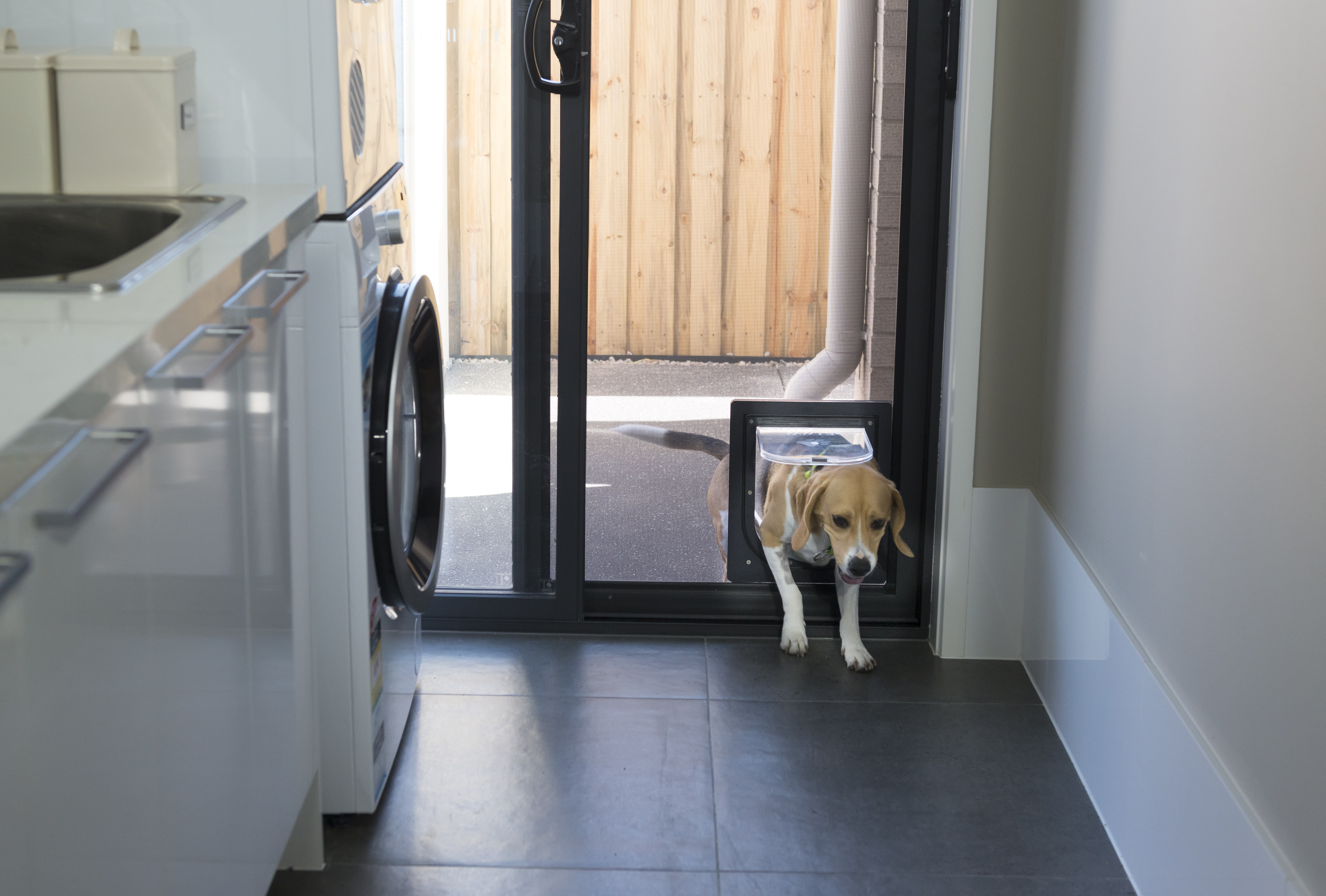
If you’ve got a dog or cat, you already know the daily juggling act: you want them to come and go as they please, but you also don’t want to leave a door propped open all day — especially with the Wide Bay’s mix of humidity, storms and the occasional cane toad or possum looking for a way in. A pet door built into a security screen solves this properly, but it’s worth understanding what actually happens to your screen’s security rating when you add one, and which option genuinely suits your home.
Does a Pet Door Compromise Your Security Screen?
This is the question we get asked most, and the honest answer is: yes, to some degree, and it’s worth knowing before you commit. Compliant security screens are tested and certified as a complete unit under Australian Standard AS5039. Once you cut an opening into that mesh for a pet door, that panel is no longer the same certified product — the opening itself becomes a potential entry point, so it can’t be represented as meeting the standard in the same way an unmodified screen can.
That doesn’t mean a pet door is a bad idea. It means the pet-door panel shouldn’t be the only thing standing between your home and the street. Most households keep their main entry doors as full, uninterrupted security screens, and fit pet access through a secondary door or a window screen instead — which is exactly the kind of trade-off worth talking through with someone who fits these every day, rather than guessing.
Why DIY Pet Door Kits Cause More Problems Than They Solve
It’s tempting to buy a generic pet door kit online and cut it into an existing screen yourself over a weekend. We’d steer you away from this. Cutting into high-tensile mesh without the right tools and edge-finishing leaves sharp, fraying edges that a determined dog or cat can worsen over time, and a poorly sealed opening is an open invitation for insects, and in Hervey Bay’s case, small wildlife. It can also void the manufacturer’s warranty on the screen, since the product has been altered outside factory specifications. If you want a pet door in a screen, it’s a job for someone who can fit it properly the first time and tell you honestly what it does and doesn’t do for your security.
The Right Way to Add a Pet Access Point
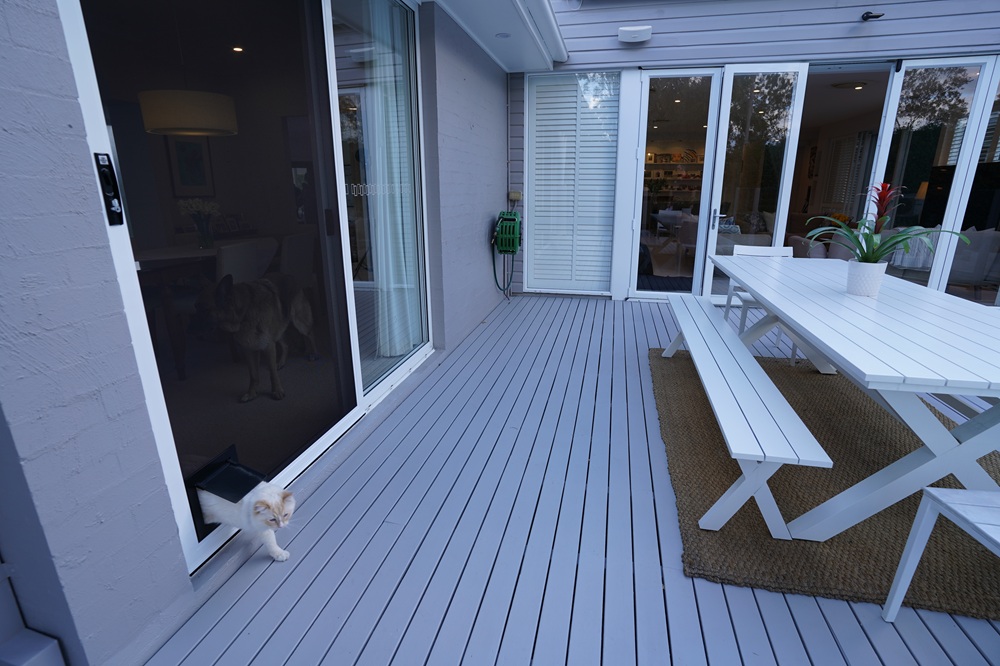
As an authorised Prowler Proof dealer, we fit a few different options depending on your door, your pet, and your budget — all detailed on our pet doors page:
- Prowler Proof Pet Door — an aluminium-framed door with a tinted flap, built into new ForceField or Protec hinge or sliding security doors so the whole unit is designed and finished as one piece, not modified after the fact.
- Petway — a budget-friendly UV-stabilised plastic pet door in small, medium and large sizes, a good option where a full custom-built panel isn’t needed.
Can Cats Really Not Claw Through It? What About Dogs Jumping at Screens?
Once the pet-access question is sorted, the rest of the screen still has to do its job. Genuine security mesh is a different material entirely from a standard flyscreen — this is where “pet mesh” (tougher flyscreen sold for scratch resistance) and true “security mesh” (aluminium or stainless steel, tested and rated) part ways. Only the second one is both pet-durable and security-rated.
Prowler Proof’s ForceField and Protec ranges are tested under AS5039.3 to a knife-shear standard — a far more aggressive test than anything a cat’s claw can manage — and to dynamic impact ratings of SL200, meaning the screen has to withstand five impacts of 200 joules each and stay locked in its frame. That’s a genuinely higher bar than a dog jumping up at a window or leaning on a door, which is exactly the scenario this test is designed to rule out.
Keeping Wildlife and Strays Out on the Wide Bay Coast
A pet door sized for your dog or cat is also, unfortunately, sized for whatever else fits through it. In and around Hervey Bay, that can mean a curious possum, a neighbourhood cat, or worse, a cane toad finding its way in overnight. A well-fitted flap that closes fully and sits flush in its frame goes a long way here — it’s worth choosing a pet door sized correctly for your own pet rather than oversized “to be safe,” and considering a closable or lockable flap for overnight if wildlife access is a concern in your street. Coastal humidity also means hardware and hinges are worth checking periodically, since anything that wears loosely stops sealing properly.
Stopping Bugs Getting Through the Flap
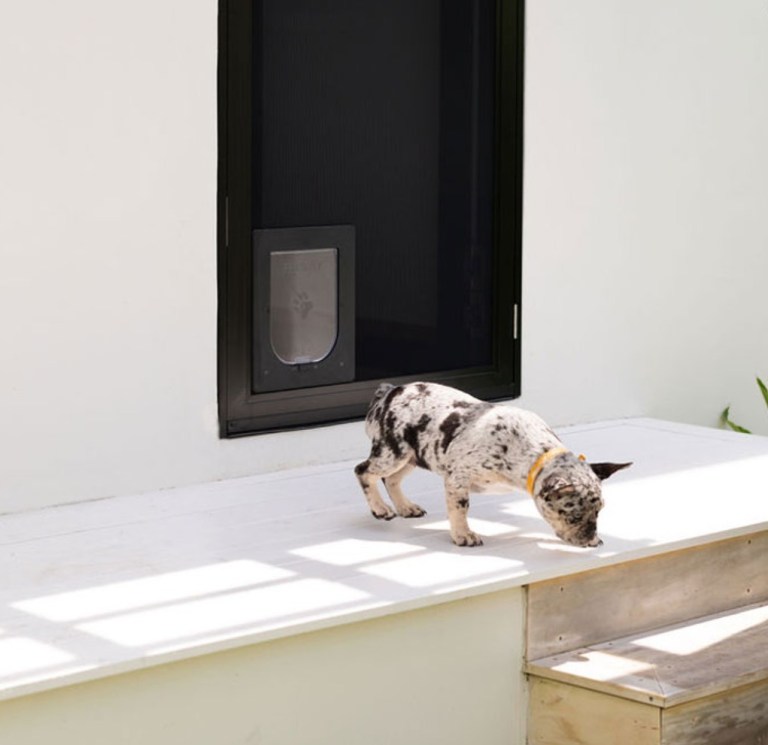
The other everyday nuisance is insects finding the same gap your pet uses. A properly fitted flap that sits closed under its own weight — rather than propped or ill-fitting — keeps midges and mosquitoes out between trips, which matters as much on the Wide Bay coast as security does.
Get It Fitted Properly
If you’re weighing up a pet door for your home, it’s worth getting an honest opinion on what suits your doors, your pet, and how much security trade-off you’re comfortable with. Head to our pet doors page for the full product range, or get in touch with the team at Jack’s Glass & Security for a free measure and quote — we’ll talk you through what’s right for your home, not just what’s easiest to install.